Source Stepper Motor Peristaltic Pump for Pharma Mining Food
Compare 30 stepper motor peristaltic pump options from verified Chinese suppliers. Evaluate specifications like flow rate, power consumption, and customization support for pharmaceutical, mining, and food applications.
Key considerations
Products List








Comprehensive Sourcing Guide
Strategic Sourcing Guide for Stepper Motor Peristaltic Pumps
Understanding the Core Technology and Operational Mechanics
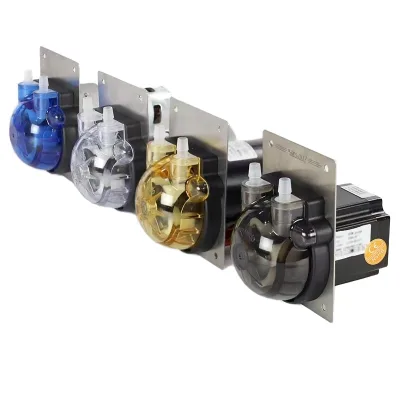
The procurement of stepper motor peristaltic pumps requires a clear understanding of the specific mechanical advantages these units offer over other fluid transfer technologies. The defining characteristic of this equipment is the use of a stepper motor to drive the pump head, which ensures precise, pulse-free flow control. Unlike continuous rotation motors, stepper motors move in discrete steps, allowing for exceptional speed resolution. In the observed market data, specific models demonstrate a speed resolution of 0.1rpm, a critical metric for applications requiring micro-dosing or high-precision infusion. This level of granularity allows buyers to manage fluid delivery with minimal variance, which is essential in pharmaceutical and laboratory settings.
The pump structure itself typically relies on a peristaltic mechanism where the fluid is contained entirely within a flexible tube. The motor rotates rollers or shoes that compress the tube, pushing the fluid forward. This design offers a significant benefit regarding seal integrity; the observed product attributes indicate that seal materials are often Stainless Steel, providing durability and resistance to corrosion. Furthermore, the absence of dynamic seals between the motor and the fluid path eliminates the risk of leakage and cross-contamination. Buyers should note that the power consumption for these units is generally low, with observed specifications indicating power usage of less than 35W or even under 30W for specific models. This energy efficiency makes them suitable for portable applications or facilities with strict energy management protocols.
Technical Specifications and Performance Parameters
When evaluating potential suppliers, buyers must scrutinize the technical specifications to ensure the pump meets the operational demands of the intended application. The flow rate is a primary consideration; observed data points to a maximum flow of 1440ml/Min for certain high-capacity units. However, for micro-peristaltic applications, the flow dynamics are often much lower, requiring careful selection based on the specific tubing diameter and motor speed. The control method is another vital specification. The market offers a variety of interfaces, including membrane keys, physical buttons, and knob controls. Some advanced units feature a 4-LED display for digital readouts, while others may support RS485 communication for integration into automated systems or PLCs.
Physical dimensions and weight are equally important for integration into existing machinery or laboratory benches. The product standards observed include specific package dimensions such as 225185248 mm and 41X26X36 cm, indicating that the footprint varies significantly between models. The drive weight for a standard unit is recorded at 2.35KG, a factor that influences mounting requirements. Additionally, the power supply requirements must be verified; observed models operate on an AC90-265V input, ensuring compatibility with global power standards. Buyers should also verify the protection grade, with IP31 being a noted standard for certain industrial units, which dictates the level of protection against solid objects and water ingress.
Compliance, Certification, and Regulatory Standards
In the B2B procurement of industrial fluid handling equipment, compliance is non-negotiable. The observed product attributes consistently list CE and ISO9001 certifications. These are not merely marketing terms but indicate that the manufacturing process adheres to specific European safety standards and international quality management systems. The presence of the CE mark suggests compliance with health, safety, and environmental protection standards for products sold within the European Economic Area. Similarly, ISO9001 certification implies that the supplier maintains a documented quality management system, which is crucial for maintaining consistency in production batches.
However, buyers must exercise caution when interpreting these certifications. The data shows that certification details are sometimes linked to specific product attributes, such as "Pipe Type:17#" or "Impeller Number:Multistage." This suggests that the certification status may be model-specific rather than a blanket guarantee for the entire supplier catalog. Therefore, procurement teams should request valid certification documents for the exact model number being purchased. Additionally, the product origin is a significant factor in regulatory compliance. The observed data lists origins in Hebei, Jiangsu, and Shanghai, China. While these regions are major manufacturing hubs, buyers should verify that the specific manufacturing facility holds the necessary local and international approvals for the intended export market.
Cost Drivers and Procurement Economics
The pricing of stepper motor peristaltic pumps is influenced by several variables, including the complexity of the control system, the quality of the motor, and the customization level. The observed market data reveals a wide price range, from $1 to $3000 USD. This disparity is likely driven by the difference between basic, single-function units and advanced models featuring digital displays, communication protocols, and high-precision stepper motors. The Minimum Order Quantity (MOQ) is another critical economic factor. The data indicates an MOQ range of 1 to 9 units, with some suppliers offering a single-piece MOQ. This flexibility is advantageous for small-scale research projects or initial prototyping phases, allowing buyers to test performance without significant capital commitment.
Customization is a major cost driver in this sector. The observed attributes confirm that OEM and ODM support are available, and customization is listed as "Available." Buyers seeking custom tubing diameters, specific housing colors, or tailored control interfaces should anticipate higher unit costs and potentially longer lead times. The packaging standard, typically cartons, also contributes to the overall cost, especially for international shipping. Buyers should consider the total cost of ownership, which includes not only the purchase price but also the cost of consumables like tubing and the potential for maintenance. While the initial price may be low, the long-term cost of replacing worn tubes and the reliability of the stepper motor drive system should be factored into the financial decision.
Typical Applications and Industry Suitability
The versatility of stepper motor peristaltic pumps makes them suitable for a diverse range of industries. The observed product attributes explicitly mention applications in the Pharmaceutical Industry, Mining Industry, and Food and Beverage Industry. In the pharmaceutical sector, the ability to handle high-speed infusion and the sterile nature of the peristaltic design (where fluid only touches the tube) are paramount. The low power consumption and precise speed control make these pumps ideal for drug delivery systems and laboratory titration.
In the food and beverage industry, the use of stainless steel seals and the ability to handle various fluids without contamination are critical. The observed "High-speed infusion" usage note suggests these pumps are also capable of rapid processing tasks. For the mining industry, the robustness of the stepper motor and the protection grade (IP31) indicate suitability for environments where dust or occasional splashes may occur. The communication function, specifically RS485, allows these pumps to be integrated into larger automated systems used in process control and monitoring. Buyers should match the specific application requirements, such as flow rate and fluid viscosity, to the pump's maximum flow and speed resolution capabilities to ensure optimal performance.
Supplier Evaluation and Quality Assurance
Selecting the right supplier involves more than just comparing prices; it requires a thorough evaluation of their manufacturing capabilities and quality assurance processes. The observed data highlights that processing services include moulding, and the plastic moulding type is specified as "Mould." This indicates that the suppliers have in-house capabilities for producing custom components, which is a positive sign for long-term supply chain stability. Buyers should verify the supplier's ability to support the specific model numbers observed, such as CM3000, BT100FC, and BT300FJ, to ensure that spare parts and technical support will be available.
Quality control should be a central part of the supplier evaluation. The presence of ISO9001 certification is a good starting point, but buyers should also inquire about specific testing procedures for the stepper motors and the peristaltic heads. The warranty period is another indicator of confidence in product quality; observed data mentions a warranty of 1 year, which is a standard benchmark. However, buyers should clarify the scope of this warranty, including coverage for the motor, electronics, and mechanical parts. Additionally, the customization support (OEM/ODM) suggests that the supplier is willing to collaborate on product development, which can be a valuable asset for companies with unique requirements.
Long-Term Procurement and Maintenance Considerations
Sourcing stepper motor peristaltic pumps is not a one-time transaction but a long-term partnership that requires planning for maintenance and scalability. The availability of replacement parts, particularly the tubing and pump heads, is crucial for minimizing downtime. Buyers should confirm that the supplier offers a consistent supply of consumables that match the specific pump model. The customization options, such as the ability to specify the pipe type (e.g., 14# or 17#), allow for optimization of the system over time as process requirements change.
Furthermore, the communication capabilities, such as RS485, enable the integration of these pumps into Industry 4.0 frameworks, allowing for remote monitoring and predictive maintenance. This feature can significantly reduce operational costs by identifying issues before they lead to failure. Buyers should also consider the environmental impact and energy efficiency of the pumps, as the observed power consumption of less than 35W aligns with modern sustainability goals. Finally, the location of the supplier, whether in Hebei, Jiangsu, or Shanghai, China, can influence logistics and lead times. Establishing a clear understanding of the supply chain dynamics is essential for ensuring a steady flow of equipment and maintaining operational continuity in the long run.
FAQs
What certifications do these pumps hold?
These pumps hold CE and ISO9001 certifications. These marks indicate compliance with European safety standards and international quality management systems, though certification details may be model-specific.
Can I customize the pump specifications?
Yes, customization is available with OEM and ODM support. Buyers can request specific tubing diameters, housing colors, or tailored control interfaces, though this may affect unit costs and lead times.
What is the maximum flow rate available?
The maximum flow rate observed is 1440ml/Min for high-capacity units. Micro-peristaltic applications often require lower flow dynamics, so selection should match tubing diameter and motor speed requirements.
How precise is the speed control?
The speed resolution is 0.1rpm, ensuring precise, pulse-free flow control. This granularity is critical for applications requiring micro-dosing or high-precision infusion in pharmaceutical and laboratory settings.
What power supply does the pump require?
The pump operates on an AC90-265V input. This wide voltage range ensures compatibility with global power standards and supports energy efficiency with power consumption generally under 35W.
Which industries use these pumps?
These pumps are used in the Pharmaceutical, Mining, and Food and Beverage industries. Their sterile design and robust stepper motors make them suitable for drug delivery, rapid processing, and dust-prone environments.
What is the minimum order quantity?
The minimum order quantity ranges from 1 to 9 units. Some suppliers offer a single-piece MOQ, which is advantageous for small-scale research projects or initial prototyping phases.